
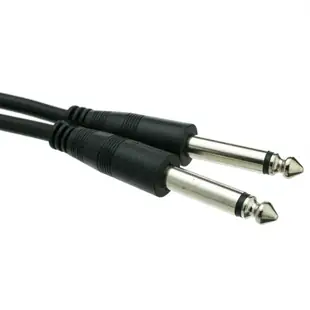
Choose a guitar cable for a pedalboard or practice amp
Lay out your guitar, first pedal and amplifier where they will sit during practice. A cable that reaches across the floor in a straight line can pull on the instrument as soon as you stand up or step on a pedal.
Which ends and jacket do you need?
The mono patch cables here include male-to-male runs and woven-jacket options. For a typical guitar output and amplifier instrument input, compare the quarter-inch mono plugs with the markings on both devices. Leave enough slack at the strap and floor without trapping a loop under a chair.
Where is that crackle coming from?
At a low listening level, connect the guitar straight to the instrument input with a known working lead. Reintroduce the pedals and their patch cables one at a time. A male-to-female extension is useful when keeping an existing lead, but it adds another joint to check during a noisy rehearsal.
Can the same plug be used between an amp head and cabinet?
Instrument cables and speaker cables may both have quarter-inch plugs. For the amplified output of an amp head, use the speaker cable construction and load specified by the amplifier manufacturer. Keep instrument patch leads labeled in your gig bag so the two jobs stay easy to distinguish in poor stage lighting.
Choose reach for a player who steps away from the amp
Lay out the amp, pedalboard and the player's usual standing point. A six-foot patch between guitar and pedalboard might be enough sitting down but pull against the jack when the player steps forward. The woven 10A2-66120 offers twenty feet for an appropriate mono patch connection. Compare that route with a shorter run plus a separate pedalboard-to-amp lead. Check the instrument maker's cable recommendation and the clearance around the jack before picking a plug. Coil excess away from footswitches. A spare tagged with the working length and plug type makes a mid-set replacement much quicker than untangling several unmarked leads. Check the route once more with the player wearing the instrument strap.
Should the long cable go before or after the pedalboard?
With passive guitar pickups, the electrical load they see depends partly on the cable leading to the first active device. A much longer lead can change the high end you hear, even if it has plenty of reach and no obvious noise. If you like the sound of your existing short guitar lead, keep it as a reference. Compare the guitar directly into the same amp with each candidate, using the same pickup, tone setting and amp channel. Then put the pedals back and listen again with the usual bypass settings. A buffered device can change the result. Choose lengths around the sound and stage layout that actually work for you. A woven jacket describes construction and feel; it does not tell you the cable’s capacitance.
Compare parts for your setup
1/4 inch Mono Patch Cable, 1/4 Male, 100 foot
10A1-611HD
- Dimensions in listing
- 1/4 inch
- Length
- 100 ft
Compare the equipment labels for balanced mono, unbalanced mono or stereo, then match the plug contacts. Measure the installed route against this 100 ft length.
1/4 inch Mono Extension Cable, 1/4 Male to 1/4 Female, 100 foot
10A1-612HD
- Dimensions in listing
- 1/4 inch
- Length
- 100 ft
Premium 1/4 inch Mono Patch Cable, 1/4 Male, Woven Jacket, 10 foot
10A2-66110
- Dimensions in listing
- 1/4 inch
- Length
- 10 ft
Compare the equipment labels for balanced mono, unbalanced mono or stereo, then match the plug contacts. Measure the installed route against this 10 ft length.


