
Matching an OM3 or OM4 backbone to its optical modules
When a switch upgrade calls for 50/125 multimode fiber, write down the optical module at each end and the measured route. The two numbers identify core and cladding dimensions. The OM grade helps determine which application and distance the design can support.
Which fiber count should I compare?
Draw the links that need to be live on day one. Include any duplex pairs, parallel optics and spare strands specified by the network designer. A six-fiber cable and a duplex zipcord may both meet the same OM grade while serving very different layouts.
Which records should accompany the order?
Give the installer the intended termination panels and cable route. Record the jacket and strand marking from the accepted reel in the rack documentation. It will help the next technician identify compatible pigtails and patch cords when expanding the backbone.
How do we order for different generations of switches?
Keep a table of the actual transmitter, receiver and intended application on each branch. One backbone may have spare fibers reserved for equipment that will arrive later. Ask the designer to document both the current requirements and the planned application so purchasing can check the proposed OM grade once for each service.
Are you distributing fibers to one cabinet or several floors?
A two-fiber zipcord and a 24-fiber distribution cable can both carry the same OM grade printed on the jacket. Lay out which fibers terminate together and which continue to another cabinet. Check each panel’s capacity, the termination approach and the spare strands called for in the design. If several floors are being brought online in phases, name the fibers that must remain available for later work. Include the approved jacket, reel length and pathway details on the quote. This avoids ordering a collection of small point-to-point cords for a route designed around one multi-fiber trunk.
Why trunk strand counts and front-panel port counts differ
A project drawing may call for twelve strands while a rack elevation shows six duplex connections. The two drawings can describe the same capacity, provided the intended optics use two strands for each link and all twelve are terminated. A different design might reserve fibers, split the trunk between panels or use parallel optics. Ask the designer to label the actual fiber allocation rather than inferring it from the quantity on the reel. Before comparing the material quote, count complete useful links at the far end, front-panel adapters, pigtails if specified and any unpresented spares. Note which parts arrive on the spool and which arrive with the termination hardware. The completed bill should be understandable to someone adding one more pair later without having to reconstruct the original design from the jacket color.
Compare parts for your setup
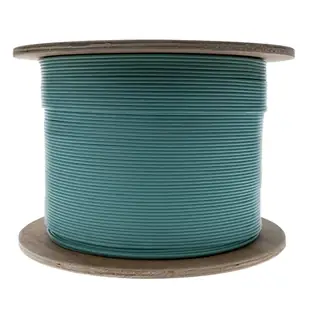
2.0mm Duplex Zip-cord Fiber Optic Cable, OM3 50/125 multimode, Corning ClearCurve® OM3, Aqua Riser-Rated Jacket, Spool, 1000 feet
10F1-302NH
- Configuration
- Duplex
- Fiber specification
- OM3 · 50/125 · multimode
- Dimensions in listing
- 2.0mm
- Length
- 1000 ft
Measure the physical route and slack at both ends before allocating a run from this 1000 ft supply.
Spiral Steel Armored Plenum 6 Strand Indoor/Outdoor Fiber Optic Distribution Cable, OM3 50/125 Multimode, YOFC Optical Fiber, Black, Spool, 500 foot
21E3-306NF
- Configuration
- 6 Strand
- Fiber specification
- OM3 · 50/125 · Multimode
- Length
- 500 ft
Measure the physical route and slack at both ends before allocating a run from this 500 ft supply.
2 Fiber Indoor Distribution Fiber Optic Cable, Multimode 50/125, OM4, YOFC Fiber,10 Gbit, Aqua, Riser Rated, Spool, 1000 foot
10E2-402NH
- Configuration
- 2 Fiber
- Fiber specification
- Multimode · 50/125 · OM4
- Data rate
- 10 Gbit
- Length
- 1000 ft


