
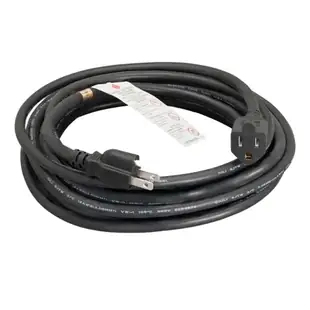
Compare outdoor extension cords by load, length and use
A cord that reaches the far side of a patio may still be the wrong choice for the appliance plugged into it. Start with the appliance maker’s guidance, including its input rating and any limits on extension cord type or length.
Read the markings on the cord
Look for explicit outdoor-use labeling and the assembly’s voltage and current rating. The listings include different wire gauges and lengths, including two noticeably different choices at fifty feet. Match the complete cord’s ratings and use conditions to the job. Appearance or jacket color cannot establish that suitability.
Measure the route people will use
Measure along a practical route that keeps the cord clear of pedestrian traffic and equipment movement. Follow the appliance and cord manufacturer’s instructions for the location, weather exposure and protection required. Choose an appropriate outlet arrangement for recurring installations rather than assuming a longer extension solves every setup.
An outdoor event with several workstations
A vendor booth with a payment device, lighting and a display may have organizer restrictions on the outlet, route and type of cord permitted. Ask for those requirements before choosing the length. Add up the equipment the organizer allows on that connection and compare it with the instructions for the source and complete cord assembly. A cord needs a suitable place to run as well as the correct markings. If a route would cross an entrance or lie where vehicles travel, ask the organizer for an approved location or routing arrangement before you buy the extra footage.
Setting up a temporary outdoor table
Plan the route to the table before selecting a length. Keep the cord out of pedestrian pinch points, account for outdoor conditions, and use the protection required for the location and equipment. The 10W3-62250 and 10W4-62250 are both listed at fifty feet for indoor/outdoor use. They use different wire gauges. Check the entire load, the equipment manufacturer's cord guidance, the voltage and the rating on the actual cord. A larger cord on one portion of the route does not increase the capacity of the outlet or other components feeding the table.
Do you need power beyond the reach of the permitted cable?
For a tool used far from a building, read the tool manual’s extension-cord table for its load and the distance you measured. If the table stops before the required distance or the tool maker gives a specific maximum, do not assume joining additional lengths is an approved solution. Ask the equipment provider or a qualified installer about an appropriate supply arrangement at the work location. Also check the cord’s physical condition before packing it for an outdoor job. If the jacket, plug or receptacle is damaged, follow the manufacturer’s removal-from-service guidance. A longer cord is a poor substitute for resolving an unsuitable supply point.
Compare parts for your setup
Outdoor Power Extension Cord, SJTW 12 AWG, 3C, 15Amp/125V, UL, 50 feet, UL, Black
10W4-62250
- Current rating
- 15Amp
- Voltage
- 125V
- Wire gauge
- 12 AWG
- Jacket rating
- SJTW
3-Outlet Indoor/Oudoor 3-Prong Wall Tap w/ LED Indicator, 125V/15A, UL
30W2-12103
- Configuration
- 3-Outlet
- Voltage
- 125V
Landscape Cable, 12/2, Stranded, Black, Spool, 500 foot
10W8-022MF
- Length
- 500 ft
Check the item’s outdoor rating, plug, current capacity and the equipment maker’s instructions for the location. Measure the installed route against this 500 ft length.


