
Buying bulk cable for several access-control devices
A door schedule may list a reader, a contact and other devices at the same opening. Copy the approved cable specification for each one. A single total for “security wire” hides the combinations you have to source.
Does a composite cable cover the required circuits?
The listings include simple two- and four-conductor cable and multi-group access-control cable. Read each group separately for conductor count, gauge and shielding. A composite jacket can simplify purchasing when its exact configuration matches the approved design. Ask the security contractor to identify unused or separately required conductors.
How do I compare two quotes?
Lay them out by opening, device, approved construction and continuous footage. Check the listed jacket and pack length on each reel. A shorter pull box can create a shortage even when the number of boxes looks right.
What if only one device on a door schedule changes?
Recheck the approved cable line for that opening. A replacement reader may require a different conductor group while the other devices retain their original requirements. Keep the manufacturer’s revised drawing with the purchase request so a quantity adjustment does not silently carry over the previous cable configuration.
Give each low-voltage device its own material line
A building quote may group doors, detectors and auxiliary devices under a single security heading. Separate their cable requirements before ordering. For each device, capture the exact approved gauge, conductor count, shielding, conductor construction and jacket designation from the project schedule. The gray 10K4-02212SH is listed as stranded 22/2, while a shielded 18/4 pull box represents a different construction. Compare required length as an uninterrupted run along the actual pathway. If the purchasing system abbreviates products to “security wire,” attach the technical schedule to the order so the installer can verify each reel on arrival.
Ordering for one door now and several similar doors later
A pilot installation can reveal how much of each cable configuration is genuinely needed. Ask the installer to record the approved cable types and quantities used at the first door, plus the pathway from the controller cabinet. The next door may use the same reader and still have a different length, hardware package or route classification. Apply the pilot quantities only after those differences are marked. Keep door identifiers on the reel allocation and on material substitutions. If a technician later asks for “the yellow access cable,” a purchase record tied to that door will identify the actual conductor groups and shielding. That is more reliable than assuming the same visible jacket color was fitted on every door in the facility.
Compare parts for your setup
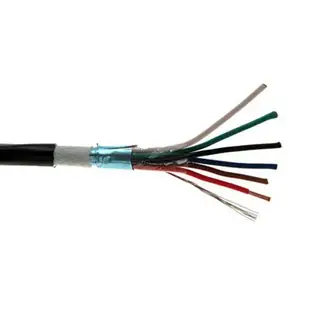
Shielded Direct Burial Multi-Purpose Wire, Black, 18/6 (18AWG 6 Conductor), Stranded, CMX / Outdoor rated, Spool, 1000 foot
10K5-76222MH
- Configuration
- 6 Conductor
- Wire gauge
- 18AWG
- Jacket rating
- CMX
- Mounting
- Direct Burial
22/2 (22AWG 2C) Solid CM Security Cable, White, 500 ft, Pullbox
10K4-02912TF
- Wire gauge
- 22AWG
- Dimensions in listing
- 500 ft
Security/Alarm Wire, Blue, 22/2 (22AWG 2 Conductor), Solid, CMR / Inwall rated, Coil Pack, 500 foot
10K4-02612CF
- Configuration
- 2 Conductor
- Wire gauge
- 22AWG
- Jacket rating
- CMR
- Length
- 500 ft
Use the equipment wiring schedule to select a run that calls for 2 conductors and measure the route from the panel to the device.
Verify conductor count, gauge, construction and jacket listing for the specified circuit and installation location.


