
Replacing the part that broke on a cable assembly
A D-sub connector can look ruined when the real problem is a cracked backshell or a missing screw. Put the disconnected lead on the bench and identify the metal connector, protective housing and fasteners before ordering a complete replacement.
Will the connector fit the housing?
Count the contacts and rows, then compare the shell dimensions and cable entrance. A bulky replacement hood can interfere with the neighboring port even when the plug fits. Check whether the assembly uses individual contacts, a ribbon cable or a prewired insert before choosing the termination style.
Check the hardware quantity
The catalog includes individual connector styles and hardware sold by the bag. Read the thread designation, fastener length and pack size separately. For a repair bench, lay out one complete assembly first so a pile of spare nuts does not leave you short a matching hood.
Can you close the shell around the cable?
For a custom control lead, check the assembled cable diameter at the point where it will enter the hood. Insulation, shielding and an outer sleeve all take up space. A hood that closes around a bare cable may pinch a sleeved bundle or leave the clamp unable to grip a thinner lead. Look for the cable-entry range in the drawing, then check where the connector screws will sit relative to the equipment panel. If you are replacing both ends of a cable that passes through a panel opening, also check whether the finished connector can fit through that opening.
Ordering a second batch after the prototype fits
Take apart the sample order on paper. A DB25 shell, the crimp contacts it accepts, the backshell and retaining hardware can each be separate line items. The 3309-025M identifies a male crimp housing. Check what the supplier actually includes before multiplying that part number by twenty. At the workbench, try the assembled prototype with the real cable jacket and the actual mating socket. A connector can seat correctly while an oversized hood blocks the next port. Keep the tested list of parts, including tool and hardware sizes, beside the assembly drawing.
How will the connector be held at the panel?
A connector ordered for a loose cable can have a similar contact face to a panel-mounted version. Before buying, sketch how the assembly will attach to the equipment. Check the panel cutout, its thickness, the fixing-hole spacing and which side must remain accessible after the panel is fitted. Look at whether the required kit includes mounting screws or only the insert. On an enclosure already in service, find out if the technician can reach the rear fasteners without removing the entire panel. That difference can turn a simple front-panel replacement into a much larger job and change which mounting arrangement suits the repair.
Compare parts for your setup
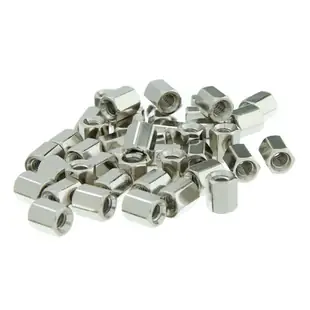
Hex Nut, # 4 - 40, 100 Pieces, 5.0mm
30D1-02440
- Dimensions in listing
- 5.0mm
- Package quantity
- 100 Pieces
Choose a housing, contacts or modular adapter for the wiring diagram of a legacy peripheral. The pack contains 100 pieces; count the parts required per installation.
DB9 Female IDC Metal Shell Connector 3 pieces
3430-14009
- Connector references
- DB9 Female
- Package quantity
- 3 pieces
Choose a housing, contacts or modular adapter for the wiring diagram of a legacy peripheral. The pack contains 3 pieces; count the parts required per installation.


