
Plan GPIB cables between bench instruments
A stack of older test instruments can each have a 24-contact connector marked GPIB, HPIB or IEEE-488. Start by listing which units share the controller. A cable choice affects both the reach to the next instrument and the clearance behind the stack.
Where will the connectors stack?
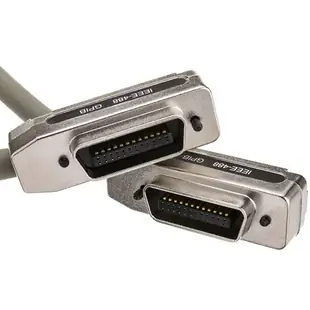
The listed cables have male and female connections at each end for continuing the bus. Check for enough depth behind the equipment for the stacked connectors, cable exits and your hand to reach the screws. Moving one instrument to the side can sometimes shorten two separate runs.
Check the complete layout
Add the measured lengths of every segment and consult the controller maker’s GPIB limits for the device count and total cabling. Record the instrument addresses before moving the bench. That gives you a way to distinguish an addressing problem from a missing physical connection when you reconnect it.
Plan a change without losing a known-good instrument setup
A lab that moves an instrument between two benches can lose track of whether a problem follows the instrument, the controller or the short connecting cable. Before the move, save the controller’s list of detected instruments and the addresses they use. After the move, confirm detection with the intended controller before opening the measurement application. If discovery works but the application talks to the wrong instrument, check its saved resource selection. If discovery fails, compare the physical bus and cable layout first. This separates a missing measurement configuration from a purchasing decision about a replacement GPIB lead.
Adding a bench meter without losing the existing instrument
Check that the proposed meter has its own GPIB address and note which equipment already responds to the controller. The one-meter 11E1-01701 has male and female CN24 connections at both ends for a daisy-chain arrangement. Position the meter so the stack can be secured without pulling sideways on the sockets. Check the new combined cable length and device count against the controller guidance. Query the original instrument first, then the new one at its own address. A duplicate address can imitate a cable fault even when the stacked connectors are seated properly.
Build the bench around which instrument moves
A calibrator that moves between a bench and a cart may be the only unit in a group that regularly gets disconnected. Discuss with the lab lead which supported layout allows that move with the least disturbance to the other instruments. Check the handling and power procedures in the instrument manuals before moving a connection. A convenient cable length should permit access to the retaining screws without forcing a neighboring connector stack. Write down which cable goes with the cart and which remains part of the fixed bench. That distinction avoids a missing link the next morning when the cart is already in another room.
A closer look at this part
GPIB/HPIB Daisy Chain Cable, IEEE-488, CN24 Male and Female on Each End, 1 meter (3.3 foot)
11E1-01701
- Length
- 1 m (3.3 ft)
Check for the 24-contact GPIB socket and the total cable length your instrument system allows. Measure the installed route against this 1 m length.
