
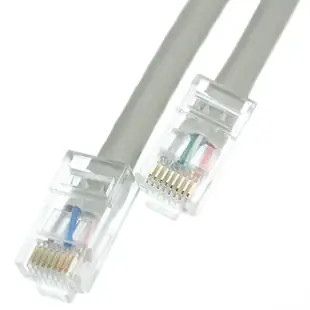
Choosing a low-profile Cat6 plug to reach a tight port
A label printer beside a wall or a compact switch with closely spaced plugs may give more room to a bootless Cat6 cord. Examine the shape of the old connector and the way its tab is released.
Is the cable long enough once the unit is in position?
Measure with the shelf or cabinet door in its normal position. Leave enough slack for the device to be serviced and enough straight clearance immediately behind the plug. A tight bend at the jack can put load on the connector even when the cable technically reaches.
How do I protect the exposed tab?
Keep the lead accessible and remove it by releasing the latch. For a cord that repeatedly travels in a tool bag, consider a booted model where the port allows it. Check exact cable and jacket specifications for any permanent pathway segment.
How can I compare two cords that appear to fit?
Put the device back on its shelf with each candidate connected. Check that the cord leaves the plug without pressing on the release tab or pulling against a neighboring port. Record the part number and measured route of the version that remains accessible in its working position.
Keep the service-port latch within reach
A repair cart may plug into the same service jack several times a day. Compare how a bare latch feels in that recessed jack with a boot that covers the release tab. The bootless 10X8-12101 is listed at one foot. Measure with the cart parked at its working position, including any guide around the monitor stand. Give the lead its own hanging position when disconnected so the exposed latch cannot snag on other tools. If an older cord has a broken tab, a spare with intact retention is a useful first comparison before diagnosing the network port.
Will a tethered cart disconnect cleanly when it leaves?
A rolling workstation may be parked at an outlet for hours and moved quickly at shift change. A bootless plug makes it easy to grip the latch, but it also leaves that latch exposed when the lead hangs loose. Give the operator a clear place to park the free plug before the cart moves. Compare the cord’s route at both ends of the permitted parking area, including the side where a swivel monitor or printer drawer opens. If the cart must move while connected, discuss the site’s approved cable support arrangement with the installer. A longer cord lying in a traffic path introduces a different problem. The final acceptance check is simple: the user should be able to find the release, disconnect, stow the connector and move the cart without dragging a loose lead.
Compare parts for your setup
Cat6 Gray Copper Ethernet Patch Cable, Bootless, POE Compliant, 100 foot
10X8-121HD
- Ethernet category
- Cat6
- Length
- 100 ft
Measure the route along the room edge or cable tray, including turns, before using this 100 ft cord to reach a distant Ethernet port.
Cat6 Blue Copper Ethernet Patch Cable, Bootless, POE Compliant, 100 foot
10X8-161HD
- Ethernet category
- Cat6
- Length
- 100 ft
Cat6 Yellow Copper Ethernet Patch Cable, Bootless, POE Compliant, 100 foot
10X8-181HD
- Ethernet category
- Cat6
- Length
- 100 ft


