
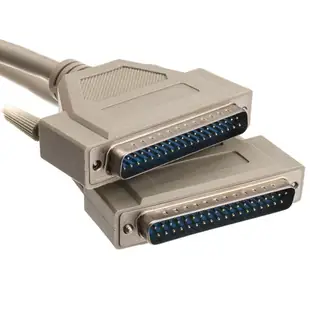
Replace a 37-pin lead without losing the instrument pinout
A DB37 port on industrial, data acquisition or test equipment may carry a device-specific set of signals. Use the equipment manual’s connector diagram as the starting point and record what the old lead connected at the other end.
When is a 1:1 assembly appropriate?
The listings include 37-conductor, straight-through assemblies and male-to-female extensions. Confirm that corresponding pin numbers are meant to connect across the run. Check the shell, fasteners and cable exit against both pieces of equipment, especially when one socket is recessed.
Keep a record of the working setup
For a replacement on a test fixture, label the equipment model and reference cable together. Ask the fixture owner about any required shielding or cable length limits. If an original assembly routed signals to different pins internally, an ordinary straight lead cannot reproduce that arrangement.
Check whether all channels fail together
On a fixture that sends several signals through a DB37 harness, a single failed channel can look like a software fault. Identify the affected channel in the fixture documentation and note whether other channels on the same lead still respond. Ask a qualified technician to compare the disconnected harness with its drawing if the documented checks call for that. A device-specific lead may omit contacts or route them somewhere unexpected. Describing which channels still work helps the equipment supplier decide whether a fully wired 37-conductor replacement fits the job or a specific custom assembly is required.
Extending a 37-pin harness on a test fixture
The 10D4-01203 is identified as a three-foot, straight-through, 37-conductor extension with one male and one female DB37 end. A test fixture with an existing cable attached might use that arrangement for additional reach if the electrical and mechanical specifications match. A separate 10D4-01103 has a different end arrangement. Read the fixture's pin assignment and signal requirements before relying on either lead. Count the connector rows and check the screw threads and shell clearance inside the enclosure. Label the circuit's purpose so a future repair does not assume every DB37 port carries the same signals.
Ordering for a multi-pin panel with very limited access
A 37-contact connector can sit behind a removable machine cover or among other large D-sub plugs. Measure the width and extension of the proposed connector body with the fastening screws included. Compare that envelope with the space available when neighboring plugs are installed. Check whether the cable leaves straight back or must turn immediately to pass under the cover. If the equipment documentation specifies a particular protective hood, shielding or fastening arrangement, include that requirement in the purchase request. An electrically straight cable can still fail the installation if the cover cannot close or a technician cannot reach the screws for maintenance.
Compare parts for your setup
Serial Cable, DB37 Male, rated, 37 Conductor, 1:1, 3 foot
10D4-01103
- Connector references
- DB37 Male
- Configuration
- 37 Conductor
- Length
- 3 ft
Check the equipment’s pin assignment and that the cable carries the required conductors straight through. Measure the installed route against this 3 ft length.
Serial Extension Cable, DB37 Male to DB37 Female, 37 Conductor, 1:1, 3 foot
10D4-01203
- Connector references
- DB37 Male · DB37 Female
- Configuration
- 37 Conductor
- Length
- 3 ft

